Helping navigate childhood and adolescence in the digital era
Research | Intervention | protection
– The Road Not Taken, Robert Frost

The Challenge
Curiosity in adolescence is normal. But the internet children are growing up on was not designed with them in mind. Much of the content they encounter, often by accident and often very young, depicts violence, aggression, and exploitation.
As a society, we don't know enough about the risks and realities of the online world for children. What we do know is that adolescence is a critical window for neurological and sexual development, and unguided exposure to harmful content during this time may matter more than we currently understand, though the evidence on how, and for whom, is still developing. Most responses to online harm wait until something has already gone wrong - a mental health crisis, a safeguarding concern, a criminal justice referral - or depend on someone knowing to ask for help. What if someone doesn't know where to find support, or even that they might need it?

The Solution
The earlier we act, the more difference we can make. Adolescence is when intervention is most powerful: identities and interests are being both discovered and formed, and patterns of behaviour and arousal developing. The window matters.
The Yellow Wood Project is focused on that window. Not on victims. Not on offenders. On children who are navigating a complex life period in a digital world without adequate guidance, and who, with the right support at the right moment, can be steered towards safer, healthier, and happier development.
The response requires empathy. These are children. They are not morally responsible for the environments they find themselves in, and stigma is the enemy of help-seeking. We don't assume a single cause behind a young person's curiosity, experiences or attractions, or a predictable path from exposure to outcome - whatever brought them to this point, they deserve help which is trauma-informed, non-judgemental, and grounded in evidence.
Our Approach
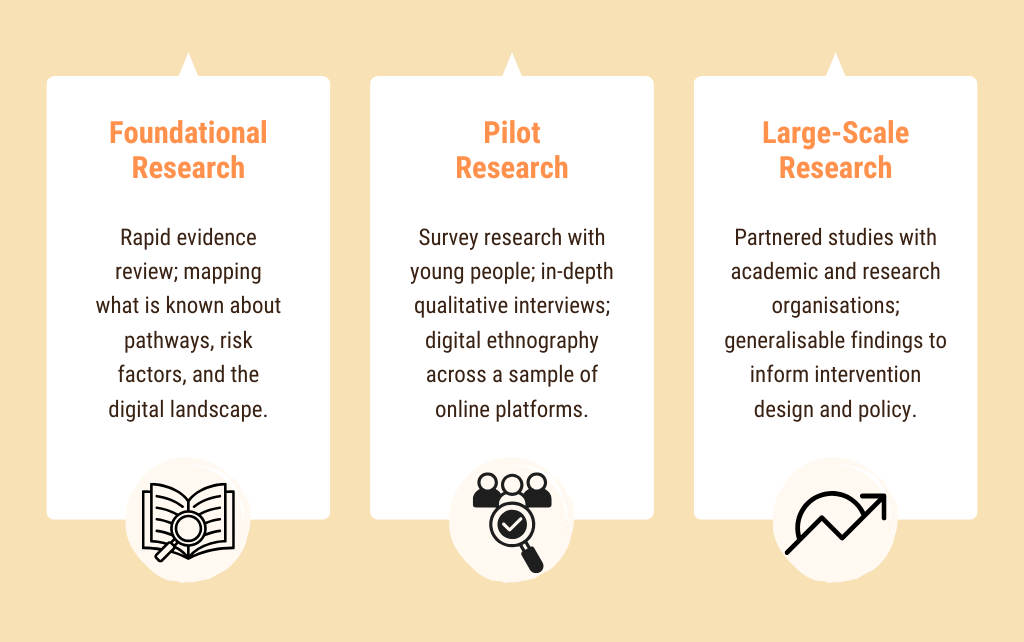
We use behavioural science frameworks to research and map the pathways through which children encounter harmful content: not just what happens, but why, where, and how. Our systems-thinking approach recognises that this urgent public health issue cannot be solved with policy or any one thing alone.
Our research will inform early interventions designed to reach young people where they already are: non-stigmatising, and informed by the evidence of what works with adolescents, including what they tell us. Support for individuals is important, and so is looking for the systemic and structural changes that can shift outcomes at scale.
We believe collaboration is key and work with others across sectors and industry. Sharing what we learn strengthens the collective response. No single organisation will solve this alone; we are committed to building the field as well as our own work.
Research Roadmap